Supreme Court quashes order separating trial of Haryana Congress MLA Mamman Khan, stressing equal legal rights for legislators.
SC Says Joint Trial Is a Legal Right, Not a Privilege
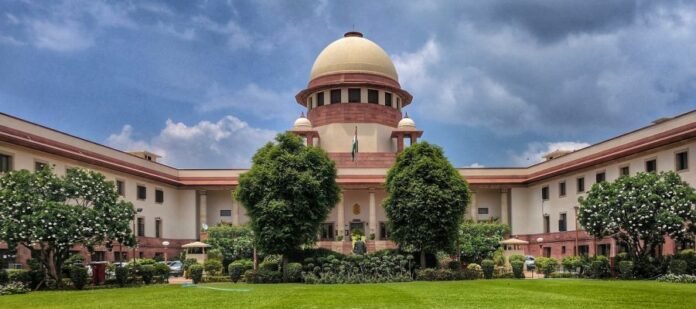
In a significant ruling reinforcing the principle of equality before law, the Supreme Court on Friday, September 12, quashed the Punjab & Haryana High Court’s direction to conduct a separate trial for Haryana Congress MLA Mamman Khan solely on the basis of his status as a legislator.
The apex court observed that speedy disposal of criminal cases involving public representatives—as laid down in Ashwini Kumar Upadhyay v. Union of India (2023)—is undoubtedly a constitutional necessity. However, it cannot override established legal rights, especially the right to a joint trial when conditions for such a trial are met.
“Being a legislator doesn’t make one any more or less deserving of procedural fairness,” remarked the bench.
Background of the Case
Mamman Khan was facing charges in connection with a communal incident in Haryana. The Punjab & Haryana High Court, invoking the need for expedited proceedings, had directed that Khan be tried separately from other co-accused, citing his status as an MLA.
This decision was challenged on the grounds that it violated Section 223 of the CrPC, which allows for joint trials when accused are charged with the same offence committed during the same transaction.
Supreme Court’s Reasoning
The Supreme Court held that no special treatment—either beneficial or detrimental—should be extended to public representatives when the law does not support such deviation.
While the Court acknowledged the spirit behind the Ashwini Upadhyay verdict, which calls for fast-tracking cases involving MPs and MLAs, it emphasized that speed should not compromise fairness.
“Judicial efficiency must not come at the cost of legality and procedural integrity,” the judgment stated.
The verdict effectively reinforces the idea that fair trial rights are universal, regardless of one’s political position.
Implications of the Verdict
Legal experts believe this ruling will have far-reaching consequences for ongoing and future cases involving politicians. It sends a strong message that legislative status cannot become the basis for bypassing standard judicial procedure.
The ruling also adds a nuanced interpretation to the Ashwini Kumar Upadhyay judgment, clarifying that while courts must expedite trials involving public servants, they must do so within the bounds of procedural fairness.
This development is particularly relevant given the recent spike in politically sensitive criminal cases, where public perception often demands quick outcomes.
Related Coverage
Stay informed on critical legal developments:
- Most Popular Cases
- National News Updates
- Legal Views and Debates
- Wall of Fame – Celebrating Legal Luminaries
- Legal Helpline for Citizens
Also, check out our in-depth video explainer on this ruling at our official channel: @TheLegalObserver YouTube