
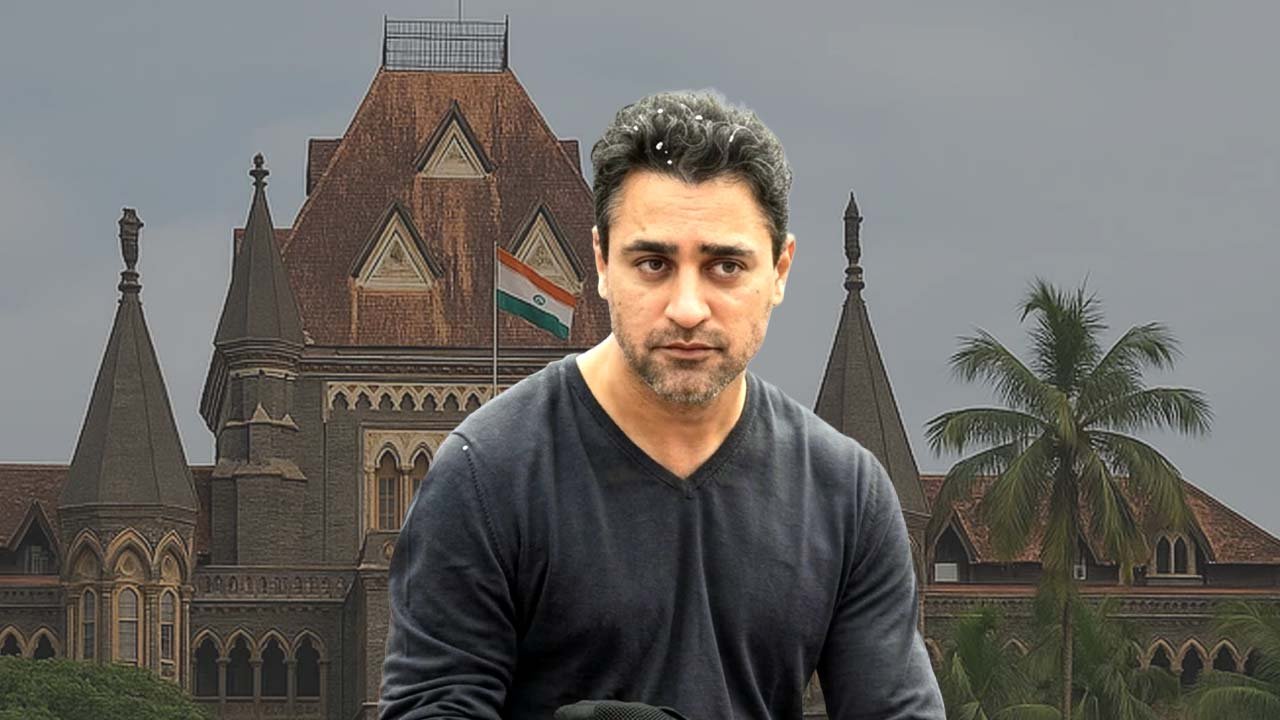
Bombay High Court asks OCI Imran Khan to apologise for joining an SIR protest and extends protection against the Leave India notice.
Subheading: The Bombay High Court has directed actor Imran Khan to tender an unconditional apology and submit an undertaking against participating in similar protests in future, while continuing interim protection from a Leave India notice issued by the FRRO.
Bombay High Court Emphasises Distinction Between OCI Cardholders And Indian Citizens
The matter was heard by a Division Bench comprising Chief Justice Mahesh Chandra Tripathi and Justice Advait Sethna, which was considering Khan’s petition challenging a Leave India Notice issued by the Foreigners Regional Registration Office (FRRO), Mumbai.
The controversy arose after Khan allegedly participated in a demonstration held in Mumbai against Chief Election Commissioner Gyanesh Kumar, demanding his resignation over the Special Intensive Revision (SIR) of electoral rolls. The protest was held on October 10, near August Kranti Maidan, where Khan was reportedly detained by Mumbai Police.
Following the incident, a complaint was lodged alleging that the actor had violated the conditions applicable to his Overseas Citizen of India status. Subsequently, the FRRO issued a Leave India Notice dated October 14, directing him to leave India by October 28.
Aggrieved by the notice, Khan approached the Bombay High Court, challenging the action taken by the authorities. His petition raised concerns regarding the legality of the notice and the absence of an opportunity to explain his position before such a direction was issued.
Earlier, on October 28, the High Court had kept the Leave India Notice in abeyance after the Centre sought an adjournment. The interim protection was initially continued until November 2, when the matter was taken up for further consideration. Live Law+2
Court Questions Imran Khan’s Participation In SIR Protest
During Monday’s hearing, the Bench questioned why Khan, being an OCI cardholder, had participated in a protest concerning the SIR exercise, particularly when the electoral revision did not directly affect him in the capacity of an Indian citizen.
The Court orally observed that there was a clear distinction between the rights enjoyed by Indian citizens and those available to OCI cardholders. It indicated that an OCI cardholder could not claim to enjoy the same political rights as an Indian citizen merely because of his long association with the country.
The Bench also sought clarification regarding the purpose of Khan’s presence at the protest venue. It asked him to categorically explain whether he had attended the demonstration as a participant or had visited the location for some other reason.
The Court further questioned whether Khan had any association with the organisers or protesters. It indicated that his explanation would be relevant before considering the relief sought against the FRRO’s decision.
The Bench orally remarked that an OCI cardholder residing in India could not be treated at par with Indian citizens and expressed its disapproval of his participation in the agitation.
It also indicated that an unconditional apology would be necessary before accepting an undertaking that Khan would refrain from participating in similar protests in the future. Live Law+1
Khan’s Counsel Offers Unconditional Apology And Undertaking
Senior Advocate Venkatesh Dhond, appearing for Khan, submitted that the actor had no association with the organisers of the protest. He also informed the Court that Khan had not been summoned for questioning or called upon to record any statement in connection with the incident.
Dhond submitted that Khan had spent almost his entire life in India, except for the first two years after his birth in the United States. He further indicated that the actor was willing to furnish an undertaking assuring the Court that he would not participate in similar protests in the future.
The counsel also submitted an unconditional apology on behalf of Khan and assured the Bench that the undertaking would be furnished.
On the other hand, Additional Solicitor General Anil Singh, representing the Union Government, opposed the petition. He argued that Khan, being a foreign national holding an OCI card, could not claim an enforceable right to reside in India indefinitely.
The ASG also referred to the limited rights available to OCI cardholders and submitted that the Central Government possessed powers under the applicable immigration framework to direct a foreign national to leave the country.
He further referred to the actor’s alleged social media activity and argued that his conduct went beyond merely being present at the protest.
The Court, however, questioned whether the Leave India Notice could have been issued without first providing Khan an opportunity to explain his position, particularly considering his long association with India and the absence of any established violation of law during his stay. Live Law+2
Court Extends Protection Against Leave India Notice
While agreeing with the Centre’s submissions regarding the distinction between the rights of Indian citizens and OCI cardholders, the Bench expressed the view that Khan should nevertheless be given a reasonable opportunity to respond to the notice issued against him.
The Court questioned whether it would have been appropriate to direct a person to leave India without first hearing his explanation, particularly when the authorities had not conclusively established his involvement in any unlawful activity.
The Bench also sought information regarding the status of the FIR registered in connection with the protest. Government Pleader Anjali Helekar, appearing for the Maharashtra Government, informed the Court that she would seek instructions regarding the matter.
The Court observed that the circumstances required consideration, particularly since Khan had been residing in India for several decades. It also referred to the principle of Vasudhaiva Kutumbakam, emphasising the need for a considerate approach while dealing with the matter.
After considering the submissions, the Bench took note of the unconditional apology and undertaking furnished on behalf of Khan. It clarified that an OCI cardholder cannot be treated at par with an Indian citizen.
The High Court consequently continued the suspension of the Leave India Notice, directing that the protection would remain operative until the FRRO considers Khan’s response and takes a decision after providing him an opportunity of hearing.
The actor’s petition challenging the FRRO notice has now been listed for further consideration on December 7, 2026. Live Law+2
OCI Status And The Right To Reside In India
The proceedings bring attention to the legal distinction between Indian citizenship and Overseas Citizen of India status. An OCI card provides certain privileges to foreign nationals of Indian origin, including specified immigration and residency-related benefits. However, it does not confer Indian citizenship or all the constitutional and political rights available to Indian citizens.
The controversy also raises questions concerning the exercise of executive powers in immigration matters and the importance of following principles of natural justice before taking decisions that substantially affect an individual’s ability to remain in the country.
While the Court acknowledged the limited rights of OCI cardholders, it also considered the necessity of providing Khan an opportunity to respond to the allegations before the FRRO takes a final decision.
The matter will now be examined further after the actor’s response is considered by the concerned authority.
For more updates on significant judicial developments, readers can visit The Legal Observer and follow its legal news coverage. Further legal discussions and developments are also available on The Legal Observer’s YouTube channel.