Supreme Court quashes FIRs against Samay Raina and four comedians over remarks about disabled persons on India’s Got Latent.
Supreme Court Grants Relief To Five Comedians
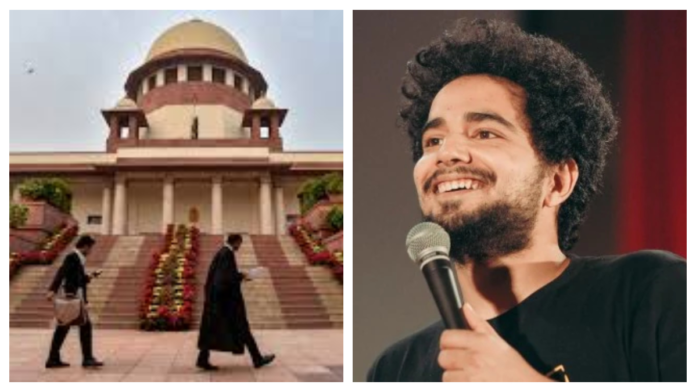
The Supreme Court has quashed criminal cases registered against YouTuber-comedian Samay Raina and four other comedians over remarks concerning persons with disabilities made during the show India’s Got Latent.
A Bench comprising Chief Justice of India Surya Kant and Justices Joymalya Bagchi and V. Mohana passed the order, bringing relief to the five individuals who had faced criminal proceedings over the controversial remarks.
Apart from Samay Raina, the relief granted by the Supreme Court extends to comedians Vipul Goyal, Balraj Paramjeet Singh Ghai, Sonali Thakkar alias Sonali Aditya Desai, and Nishant Jagdish Tanwar.
FIRs Quashed By Supreme Court
The proceedings arose from allegations concerning insensitive remarks made during the comedy programme about persons with disabilities. The controversy led to the registration of criminal cases against the comedians.
The Supreme Court’s decision to quash the FIRs brings the criminal proceedings against the five comedians to an end in relation to the cases covered by the order.
The case also highlights the continuing legal questions surrounding comedy, online content and the limits of expression when remarks concern vulnerable sections of society.
Samay Raina And Other Comedians Get Relief
Samay Raina, who is known for his work as a stand-up comedian and YouTube creator, was among those facing criminal proceedings following the controversy surrounding India’s Got Latent.
The other comedians who received relief are Vipul Goyal, Balraj Paramjeet Singh Ghai, Sonali Thakkar, and Nishant Jagdish Tanwar.
By quashing the FIRs, the Supreme Court has provided significant relief to all five accused persons in the proceedings before it.
The order was passed by the Bench headed by CJI Surya Kant along with Justice Joymalya Bagchi and Justice V. Mohana.
Free Speech And Responsible Comedy
The case comes against the broader backdrop of debates concerning freedom of expression in comedy and digital entertainment. While comedians and content creators enjoy the protection of free expression, remarks concerning persons with disabilities and other vulnerable groups can generate questions regarding dignity, sensitivity and the limits of permissible speech.
The Supreme Court’s intervention therefore assumes significance for the online entertainment ecosystem, where comedy programmes and creator-driven content reach large audiences through digital platforms.
At the same time, the quashing of criminal proceedings in a particular case must be understood in the context of the order passed by the Court and the allegations involved. It does not by itself establish a general rule that all controversial or insensitive remarks are immune from legal scrutiny.
Significance Of The Order
The decision provides immediate relief to the five comedians and ends the criminal proceedings arising from the FIRs that were before the Supreme Court.
The case also demonstrates the role of the judiciary in examining whether criminal proceedings should continue when allegations arise from speech or entertainment content. The balance between protecting vulnerable communities and safeguarding legitimate expression remains an important issue in India’s evolving digital media landscape.
Readers can follow further updates on the The Legal Observer, including the latest developments in the National News section and other legal news coverage.
The development is also relevant to continuing discussions on freedom of expression and the responsibilities of digital creators. More legal analysis is available through The Legal Observer’s Views section.
The Supreme Court’s order has consequently brought relief to Samay Raina and the four other comedians named in the proceedings. The decision is likely to remain significant in discussions involving comedy, digital content, criminal complaints and the legal boundaries of expression.
For more legal news and video updates, readers can also visit The Legal Observer’s YouTube channel.