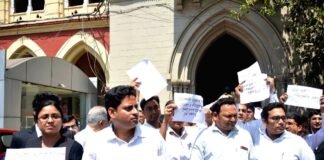

The indefinite hunger strike of activist and education reformer Sonam Wangchuk has brought back into focus one of constitutional law’s most intricate paradoxes: Where does an individual’s right to bodily autonomy end, and where does the State’s duty to preserve human life begin?
When public interest litigations (PILs) were filed in the Delhi High Court seeking emergency medical intervention—including potential force-feeding—for Wangchuk as his health parameters deteriorated, the court was asked to navigate a long-standing legal gray zone. Rather than issuing blanket directions to force-feed or halt the fast altogether, the High Court directed regular medical monitoring while leaving clinical decisions to attending doctors.
This nuanced approach reflects decades of evolving jurisprudence, balancing fundamental rights with the constitutional responsibilities of the State.
1. The Constitutional Conflict: Article 19 vs. Article 21
At the heart of the debate over political hunger strikes in India lies a friction between two core fundamental rights:
                     CONSTITUTIONAL BALANCING ACT

    ┌──────────────────────────┐    ┌──────────────────────────┐
    │    Article 19(1)(a/b)    │    │        Article 21        │
    │  - Freedom of Speech     │ VS │  - Positive Duty of Care │
    │  - Peaceful Assembly     │    │  - Sanctity of Human Life│
    │  - Right to Dissent      │    │  - Right to Health       │
    └─────────────┬────────────┘    └─────────────┬────────────┘
                  │                               │
                  └───────────────┬───────────────┘
                                  ▼
                         JUDICIAL HARMONY
             "Proportional & Least Restrictive Intervention"
- The Right to Protest (Article 19): Freedom of speech, expression, and peaceful assembly without arms under Articles 19(1)(a) and 19(1)(b) includes non-violent political dissent. Fasting has historically been recognized in Indian democratic tradition as a potent form of peaceful civil resistance.
- The Duty to Preserve Life (Article 21): The Supreme Court has repeatedly affirmed that Article 21 guarantees the “right to life,” but not a general “right to die” (Gian Kaur v. State of Punjab, 1996). Article 21 imposes a positive constitutional obligation on the State to safeguard human life when it faces imminent peril.
Supreme Court Rules Married Daughters Eligible for Compassionate Appointment, Strikes Down Exclusion as Unconstitutional
When a protester’s health drops to life-threatening levels, the State cannot remain a passive observer. However, suppressing a peaceful protest under the guise of medical protection risks eroding democratic freedoms.
2. Criminal Law, Penal Reforms, and Intent
The statutory lens on hunger strikes has undergone significant legislative and judicial shifts:
| Era / Statute | Legal Position on Hunger Fasts | Impact on Protesters |
|---|---|---|
| IPC Section 309 (Legacy) | Attempted suicide was a criminal offense. | Protesters (most famously Irom Sharmila) were periodically arrested and subjected to nasogastric force-feeding while in judicial custody. |
| Mental Healthcare Act (2017) | Decriminalized suicide attempts by presuming severe stress. | Shifted the focus from punitive criminal prosecution toward psychiatric care and rehabilitation. |
| Bharatiya Nyaya Sanhita (BNS Section 226) | Offense to attempt suicide to compel or restrain a public servant from performing duties. | Requires proof of specific intent to coerce a public official, meaning a general peaceful political fast does not automatically trigger criminality. |
In Sonam Wangchuk’s case, courts focused entirely on healthcare oversight under Article 21 rather than treating the hunger strike as a criminal attempt at suicide.
3. The Dilemma of Force-Feeding & Bodily Autonomy
One of the most contentious legal issues during a prolonged fast is force-feeding.
The Medical Ethics View
International frameworks, such as the World Medical Association’s (WMA) Declaration of Malta, consider force-feeding a mentally competent person who has voluntarily chosen to refuse food as ethically unacceptable and a violation of bodily integrity.
The Judicial Middle Path in India
Indian courts have generally avoided imposing blanket mandates for forced feeding on competent individuals. Instead, constitutional jurisprudence prioritizes proportionality:
- Capacity Check: As long as the individual remains conscious and mentally competent, their choice to refuse food is respected under bodily autonomy.
- Medical Supervision: The court orders daily monitoring by independent government medical boards.
- Emergency Intervention: If the protestor loses consciousness or capacity, or faces irreversible organ damage, medical professionals are empowered to administer lifesaving care guided by clinical judgment rather than coercive administrative orders.
4. Key Takeaways from Recent Jurisprudence
The judicial directives in the Wangchuk matter reinforce a set of legal doctrines established across landmark hunger strike cases (including recent matters like Jagjit Singh Dallewal, 2024):
- State Oversight is Mandatory, Suppression is Not: The State must provide medical infrastructure and continuous health evaluations, but health monitoring cannot be weaponized as a pretext to dismantle a peaceful assembly.
- Judicial Restraint on Executive Demands: While courts intervene to safeguard physical survival, they maintain strict boundaries regarding political outcomes, refusing to order the government to accept or reject the underlying demands of the protest.
- Pragmatic Rights Harmony: Human dignity under Article 21 requires saving a citizen’s life, while democratic freedom under Article 19 requires honoring their voice.
Conclusion
Sonam Wangchuk’s high-profile fast demonstrates that hunger strikes in Indian democracy are neither purely medical emergencies nor mere legal infractions. They occupy a unique constitutional space.
By favoring continuous clinical assessment and least-restrictive intervention over force-feeding or immediate criminalization, Indian courts continue to refine a delicate balance: ensuring that the State fulfills its obligation to protect life without stripping citizens of their constitutional right to peacefully register dissent.
Sonam Wangchuk’s/Sonam Wangchuk’s Hunger Strike/Sonam Wangchuk’s
hospital/ Sonam Wangchuk’s new