
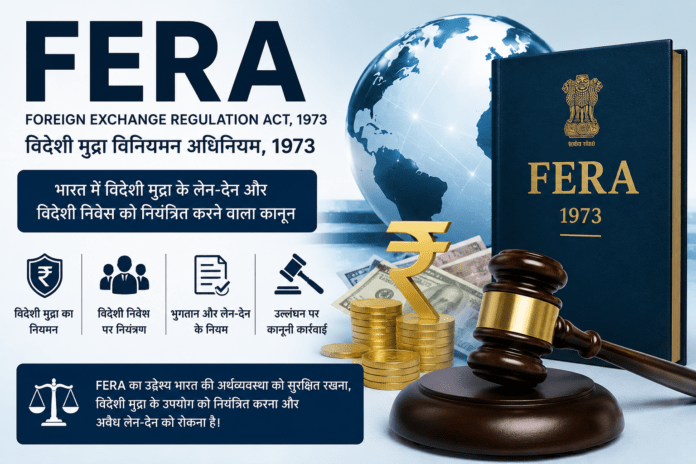
In a significant legal development, the Supreme Court of India ruled that a Magistrate’s decision to take cognizance of a complaint under the repealed Foreign Exchange Regulation Act, 1973 (FERA) is legally invalid if the mandatory opportunity notice was not issued to the accused party.
A Division Bench comprising Justice J.B. Pardiwala and Justice Manoj Misra delivered the judgment, setting aside an earlier decision by the Bombay High Court and quashing long-pending proceedings against Standard Chartered Bank and one of its senior officials.
Core Findings of the Supreme Court
1. Non-Negotiable Statutory Safeguard
The Apex Court emphasized that serving an opportunity notice under Section 61(2) of FERA is not merely an administrative routine, but an indispensable legal shield:
- Statutory Defense: The requirement allows targeted entities an opportunity to demonstrate whether their foreign exchange transfers were backed by valid Reserve Bank of India (RBI) authorizations before facing criminal prosecution.
- Obligation on the Prosecution: The burden of proof rests entirely on enforcement agencies to establish that the notice was officially dispatched and served.
- Void Cognizance: The Bench held that taking cognizance without verifying compliance with this mandatory prerequisite renders the entire judicial initiation defective and legally void from the outset.
2. High Court’s Inherent Powers Intact
Addressing a key procedural point, the Supreme Court overturned the Bombay High Court’s refusal to interfere. The High Court had suggested that the bank should have pursued a revision petition under Section 397 CrPC instead. The Supreme Court clarified that the existence of an alternative statutory remedy does not restrict a High Court’s inherent jurisdiction under Section 482 CrPC to step in and quash proceedings to prevent an abuse of the judicial process.
The Legal Tightrope: How Sonam Wangchuk’s Hunger Strike Tests the Limits of Autonomy and State Duty
3. Severe Criticism Over Decades of Inordinate Delay
The Court expressed sharp dissatisfaction with the prosecution’s handling of the timeline:
- The alleged foreign exchange infractions occurred in 1992.
- Criminal complaints were initiated by the Enforcement Directorate (ED) a decade later, in 2002.
- Over two decades later, the case remained stuck at the preliminary stage of summons issuance due to prosecutorial inertia.
Case Summary & Final Order
The conflict stemmed from remittances executed through Standard Chartered’s Vostro accounts in 1992. When challenged in court, the ED failed to provide documentary proof that the mandatory opportunity notice was ever generated or served upon the accused bank.
Concluding that statutory procedures were bypassed and procedural fairness was breached, the Supreme Court allowed the appeals, setting aside the trial court’s summoning orders and quashing Criminal Case Nos. 1503–1504 of 2002.
FERA /FERA new /FERA Complaint