
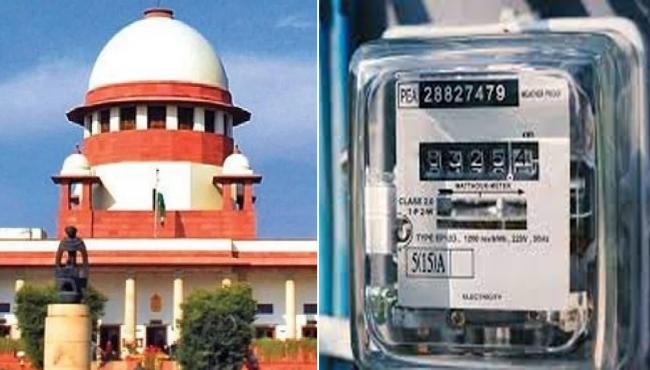
Supreme Court rules under the Electricity Act that dues beyond two years can be recovered only if continuously shown as recoverable arrears.
The Supreme Court has clarified the limitation governing recovery of old electricity dues, holding that amounts beyond two years cannot ordinarily be recovered unless continuously carried forward as arrears.
The Supreme Court has reiterated an important safeguard concerning the recovery of old electricity dues, observing that an electricity bill would ordinarily have to be raised within two years of the relevant consumption.
The Court, however, clarified that a claim falling beyond the two-year period is not automatically extinguished if the outstanding amount has been continuously reflected as a recoverable arrear.
A bench comprising Justice S. V. N. Bhatti and Justice N. V. Anjaria made the observation while dismissing an appeal filed by Dakshinanchal Vidyut Vitran Nigam Ltd., a distribution licensee in Uttar Pradesh.
The dispute concerned a demand of Rs. 57,74,164, claimed towards Minimum Consumption Guarantee Charges (MCGC) for the period between February 1998 and September 1998. The charges related to an additional 2,000 KVA load facility that the distribution licensee had offered to supply to the consumer.
Two-Year Limitation For Raising Electricity Bills
The Supreme Court’s observation is significant because electricity consumers can face demands relating to consumption or charges dating back several years.
The Court indicated that, as a general rule, an electricity bill is required to be raised within two years from the date of consumption. The limitation is intended to prevent consumers from being confronted with stale demands after an extended period.
However, the Court distinguished between a demand that is raised for the first time after the expiry of two years and an amount that has already been treated as outstanding and continuously carried forward.
Thus, where an amount falling beyond the two-year period has consistently been shown as a recoverable arrear, its recovery may still be permissible.
This distinction places importance on the manner in which electricity dues are reflected in the consumer’s account. A distribution licensee cannot simply revive an old demand after several years without demonstrating that the amount remained continuously recorded as an arrear.
Dispute Over Minimum Consumption Guarantee Charges
The appeal before the Supreme Court arose from the distribution licensee’s attempt to recover MCGC relating to the additional 2,000 KVA load.
The amount claimed pertained to a period nearly three decades old, covering February 1998 to September 1998. The licensee sought recovery of Rs. 57.74 lakh from the consumer.
The Supreme Court ultimately dismissed the appeal, thereby declining to interfere in favour of the distribution licensee.
The decision underscores that electricity authorities must maintain proper records of outstanding amounts and cannot rely merely on the age of a claim to justify its recovery.
For consumers, the ruling provides an important point of reference when confronted with long-pending electricity demands. For distribution companies, it highlights the need for timely billing and transparent maintenance of arrears.
Importance For Electricity Consumers
The ruling has broader significance under the Electricity Act, particularly in disputes involving delayed billing and recovery of historical electricity dues.
The Court’s approach balances two competing considerations: preventing legitimate outstanding amounts from becoming irrecoverable merely because of delay, while also protecting consumers from unexpected claims raised after an unreasonable lapse of time.
The requirement that an old amount must have been continuously treated as a recoverable arrear is therefore crucial. It prevents a distribution licensee from treating a previously unclaimed amount as a fresh demand after the limitation period has passed.
The judgment is likely to be relevant in future disputes involving delayed electricity bills, minimum consumption charges and other historical demands raised by distribution licensees.
Readers can follow more developments in electricity and regulatory law through the National News section and explore other important legal developments on The Legal Observer.
For more legal news and analysis, watch The Legal Observer on YouTube.