
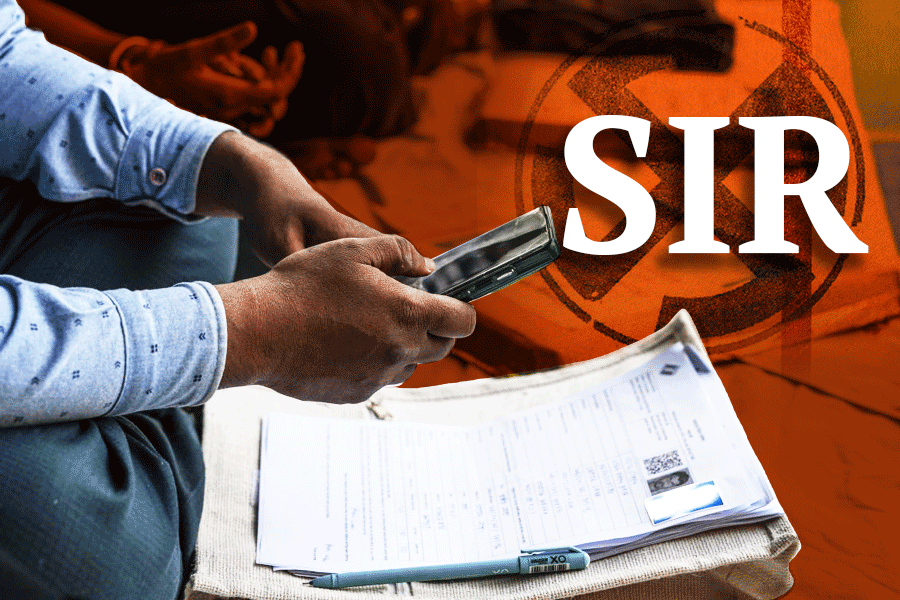
SIR, citizenship and voter rights raise concerns over mass deletions, constitutional safeguards and the burden of proof in electoral roll revision.
The Special Intensive Revision of electoral rolls has triggered a crucial constitutional debate over citizenship, voter eligibility, mass deletions and the evidentiary burden on the Election Commission of India.
The Constitutional Basis of Electoral Registration
The Election Commission of India (ECI) has defended the Special Intensive Revision (SIR) of electoral rolls by asserting that it is constitutionally and statutorily obligated to maintain accurate voter lists, which are essential for ensuring free and fair elections. According to the Commission, the last comprehensive revision of electoral rolls took place more than two decades ago. Since then, rapid urbanisation, demographic changes, migration and increased population mobility have significantly altered the composition of the electorate.
The ECI has also cited concerns regarding cross-border infiltration as an important justification for undertaking the exercise. However, the decision to conduct a nationwide revision has raised questions about the extent of the Commission’s powers and the constitutional safeguards available to eligible voters.
The issue assumes particular significance because the SIR exercise has been challenged before the Supreme Court of India. Critics have argued that the ECI has not produced adequate empirical evidence to substantiate several of its claims regarding electoral inaccuracies and the necessity of such an extensive revision. They have also questioned why the Commission’s justifications were accepted prima facie without insisting upon objectively verifiable evidence establishing the necessity and proportionality of the exercise.
The constitutional validity of the SIR exercise, therefore, raises a broader question: can an administrative exercise affecting millions of voters proceed without a sufficiently demonstrated factual foundation?
Nearly 13.98 Crore Names Deleted From Electoral Rolls
The scale of the exercise has intensified these concerns. According to figures reported as of September 26, 2026, approximately 13.98 crore names had cumulatively been deleted from electoral rolls during Phases I, II and III of the SIR exercise across 12 States and Union Territories.
Such extensive deletions bring the question of electoral integrity into direct conflict with the fundamental democratic principle of universal adult suffrage. While removing duplicate, deceased or otherwise ineligible entries is a legitimate electoral requirement, the process must ensure that eligible citizens are not inadvertently excluded.
The distinction between eliminating fraudulent entries and depriving eligible citizens of their voting rights is particularly important. A revision intended to improve electoral accuracy cannot become a mechanism through which genuine voters are denied participation merely because they face difficulties producing documents or establishing their eligibility within prescribed procedures.
The concerns surrounding the SIR exercise have also been discussed in wider debates concerning national legal and constitutional developments.
Article 326 and the Constitutional Guarantee of Voting Rights
Article 326 of the Constitution establishes the principle of elections based on adult suffrage. It provides that every citizen of India who has attained the age of 18 years shall be entitled to be registered as a voter, subject to constitutional and statutory disqualifications.
The provision recognises voting eligibility as a constitutional entitlement founded on citizenship and adult suffrage. Consequently, electoral registration must operate within the constitutional framework and cannot be administered arbitrarily.
However, the constitutional guarantee does not mean that every individual is automatically entitled to remain on the electoral roll irrespective of eligibility. The central requirement is that every eligible citizen must have a fair and effective opportunity to establish their entitlement to registration.
This distinction becomes particularly significant when the SIR exercise involves extensive documentation requirements, verification procedures and the possibility of deletion. The burden of ensuring electoral accuracy cannot be interpreted in a manner that places unreasonable obstacles before genuine voters.
Who Should Bear the Burden of Proof?
One of the most significant questions emerging from the SIR controversy concerns the burden of proof. Where an individual’s name is proposed to be deleted from the electoral roll, the process must provide adequate notice, a meaningful opportunity to respond and a fair mechanism for challenging an adverse decision.
The Election Commission undoubtedly possesses statutory authority to undertake electoral roll revisions. However, the exercise of such authority must remain consistent with constitutional principles, procedural fairness and the applicable provisions of electoral law.
A particularly important concern arises when ordinary citizens, especially those belonging to economically disadvantaged or marginalised communities, are required to establish their eligibility through documents that may not always be readily available to them.
The responsibility of maintaining accurate electoral rolls cannot be converted into an unreasonable evidentiary burden on citizens. Equally, allegations of cross-border infiltration or electoral irregularities must be addressed through lawful and individualised verification rather than assumptions about particular populations.
Balancing Electoral Integrity With Democratic Rights
The SIR exercise highlights the delicate relationship between the Election Commission’s responsibility to maintain reliable electoral rolls and the constitutional protection of eligible voters.
The objective of preventing fraudulent voting and ensuring accurate electoral records is undoubtedly legitimate. Nevertheless, the methods adopted to achieve that objective must satisfy the requirements of fairness, transparency and proportionality.
The Supreme Court’s scrutiny of the SIR exercise is therefore significant beyond the immediate question of electoral administration. It concerns the constitutional limits of administrative discretion and the safeguards necessary to prevent the exclusion of eligible citizens.
Ultimately, the credibility of an election depends not merely on the removal of ineligible names but equally on ensuring that every eligible citizen can exercise their democratic right.
The constitutional debate surrounding SIR is thus not simply about citizenship verification or electoral housekeeping. It is about determining who bears the burden when citizenship and voting eligibility are questioned, and whether administrative convenience can ever outweigh the constitutional commitment to universal adult suffrage.
As India continues to undertake extensive electoral revisions, the guiding principle must remain clear: electoral accuracy is essential, but it cannot come at the cost of excluding genuine voters from the democratic process. The legitimacy of electoral democracy rests as much on the inclusion of eligible citizens as on the exclusion of ineligible entries.
For further discussions on constitutional rights, electoral reforms and developments in Indian law, readers can follow The Legal Observer and its video coverage.