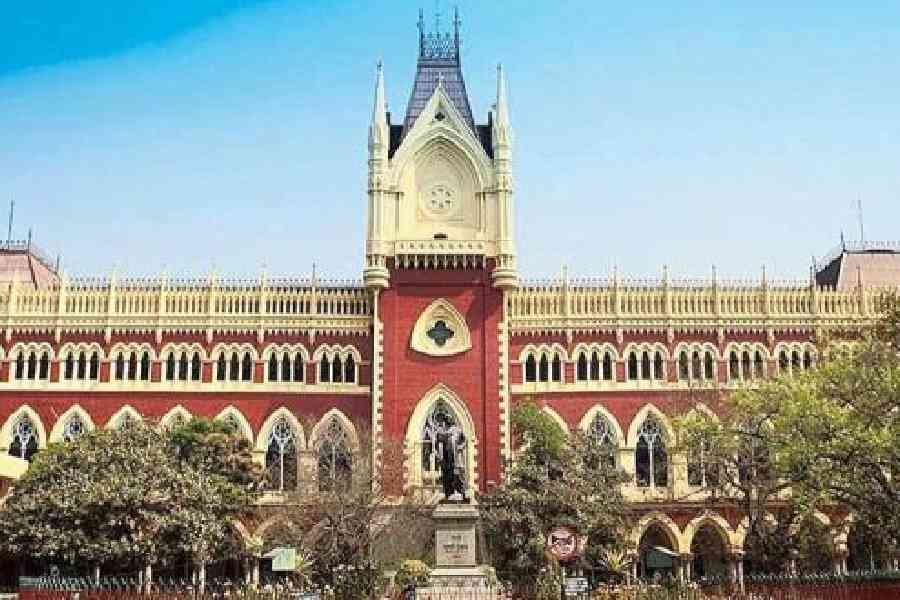
Calcutta High Court confirms Ashok Singh’s death sentence for the rape and murder of a five-year-old girl in Hooghly in November 2024.
Reaffirming the gravity of the crime, the Calcutta High Court has upheld the death penalty awarded to a man convicted of raping and murdering a five-year-old girl in Hooghly in November 2024.
The Calcutta High Court has confirmed the death sentence awarded to Ashok Singh for the rape and murder of a five-year-old girl in Hooghly district in November 2024. The Division Bench also directed the West Bengal Government to increase the compensation payable to the deceased child’s parents from Rs. 10 lakh to Rs. 15 lakh, expressing displeasure over the State’s failure to disburse the earlier amount.
Division Bench Rejects Convict’s Appeal
A Division Bench comprising Justice Arijit Banerjee and Justice Apurba Sinha Ray, in its judgment dated November 17, 2026, upheld the death penalty imposed by the Exclusive POCSO Court, Chinsurah, in January 2025.
The High Court confirmed the death reference filed by the State Government and dismissed the criminal appeal preferred by Ashok Singh challenging his conviction and sentence.
The proceedings arose from the November 24, 2024 incident, when the five-year-old girl went missing from her home in the Gurap area of Hooghly district. During the search, her parents and neighbours discovered her unconscious inside the convict’s residence. She was subsequently taken to Dhaniakhali Rural Hospital, where she was declared dead.
The prosecution relied upon the testimony of a neighbour who stated that she had seen Singh taking the child to his house on the pretext of giving her chocolates. The forensic examination also detected Singh’s DNA in samples collected from the victim.
The post-mortem examination revealed injuries consistent with sexual assault and serious head injuries. The medical evidence established that the child had died a homicidal death.
The Exclusive POCSO Court subsequently convicted Singh under the relevant provisions of the Bharatiya Nyaya Sanhita, 2023, and the Protection of Children from Sexual Offences (POCSO) Act, 2012, and awarded him the death sentence on January 17, 2025.
Court Examines ‘Rarest Of Rare’ Doctrine
Before the High Court, Singh challenged the conviction on the ground that the prosecution case was based primarily on circumstantial evidence and that the chain of circumstances was insufficient to establish his guilt conclusively.
The defence also questioned the credibility of the neighbour’s testimony and argued that the trial court had failed to adequately consider mitigating circumstances, the possibility of rehabilitation and the alternative punishment of life imprisonment for the remainder of his natural life.
The State, represented by Special Public Prosecutor Jayanta Narayan Chatterjee, opposed the appeal, submitting that the victim was last seen with Singh, her body was recovered from his residence and the forensic and medical evidence established his involvement.
The High Court examined the principles governing capital punishment laid down by the Supreme Court in Bachan Singh v. State of Punjab and subsequent judgments.
The Bench emphasised that even in cases involving exceptionally grave offences, courts must examine whether the convict has any possibility of reformation or rehabilitation before confirming the death penalty.
For this purpose, the Court considered Singh’s medical and psychological assessments along with the Probation Officer’s report. It noted that he was approximately 45 years old, illiterate and had no family at present. The medical assessments did not indicate any mental illness or psychological disorder.
The Court also considered evidence concerning his alleged inappropriate conduct towards other minor girls in the neighbourhood and observed that he had shown no remorse during his examination under Section 313 of the Code of Criminal Procedure.
After evaluating the aggravating and mitigating circumstances, the Bench concluded that there was no reasonable possibility of his reformation. It held that imprisonment for the remainder of his natural life without remission would also be inadequate in the circumstances of the case.
Accordingly, the Court found no justification to interfere with the death sentence imposed by the trial court.
Compensation Increased From Rs. 10 Lakh To Rs. 15 Lakh
An important aspect of the judgment concerned the compensation payable to the victim’s parents.
The Bench expressed serious concern that the parents had not received the Rs. 10 lakh compensation previously directed to be paid, despite the State Government pursuing confirmation of the death sentence against the convict.
Describing the failure to disburse the compensation as unfortunate, the Court directed the State Government to enhance the amount from Rs. 10 lakh to Rs. 15 lakh.
The enhanced compensation must be paid to the victim’s parents within two months from the date of the judgment. The State has also been directed to submit a compliance report before the Registrar General of the Calcutta High Court by January 30, 2027.
Right To Appeal Before Supreme Court
The High Court further directed the Registrar General to communicate a copy of the judgment to Singh through the Superintendent of the concerned correctional home.
The convict is to be informed of his right to challenge the judgment before the Supreme Court and avail free legal aid for pursuing the appeal.
The judgment marks a significant development in the criminal justice proceedings concerning the Hooghly incident, particularly in its consideration of the death penalty, the possibility of rehabilitation and the State’s obligation to ensure compensation to victims’ families.
The ruling also highlights that the responsibility of the State towards victims and their families does not end with securing a conviction and punishment.
For more updates on important High Court judgments and developments in criminal law, visit The Legal Observer’s National News section and follow its legal coverage through the The Legal Observer YouTube channel.
Case Title: State of West Bengal v. Ashok Singh
Case Details: Death Reference No. 2 of 2025 along with CRA (DB) 328 of 2025.