
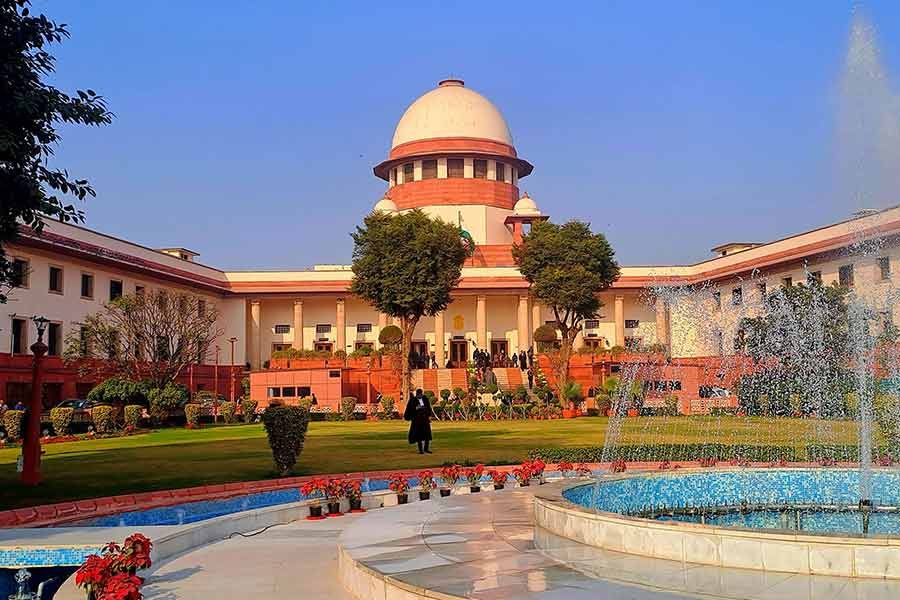
Supreme Court urges Centre and BCI to frame POSH regulations for sexual harassment complaints by women lawyers across courts and tribunals.
The Supreme Court has called for a dedicated regulatory framework to address sexual harassment complaints involving women lawyers practising across India’s judicial and quasi-judicial forums.
The Supreme Court on Friday urged the Union Government and the Bar Council of India (BCI) to work together on regulations governing complaints of sexual harassment made by women lawyers practising before different courts and quasi-judicial bodies.
A bench comprising Justice BV Nagarathna and Justice Augustine George Masih observed that the provisions of the Sexual Harassment of Women at Workplace (Prevention, Prohibition and Redressal) Act, 2013, commonly known as the POSH Act, cannot necessarily be applied to women in the legal profession in a “straitjacket manner”.
The Court suggested that the Centre and the BCI should study the regulations framed by the Supreme Court in 2013 and consider developing a similar mechanism applicable to women lawyers working before High Courts, district courts, Taluka courts, tribunals and other quasi-judicial authorities.
The development assumes significance because legal professionals often work across multiple institutional settings. Women advocates may appear before courts, tribunals and other authorities without having a conventional employer-employee relationship with the institution where an alleged incident takes place.
Need For A Legal Profession-Specific Framework
The POSH Act provides a statutory mechanism for prevention, prohibition and redressal of sexual harassment at the workplace. However, the legal profession presents a distinct working structure involving advocates, court staff, judges, clients and other professionals.
The Supreme Court’s observation indicates that applying the statutory framework mechanically may not adequately address the particular circumstances in which women lawyers practise.
Instead, the proposed regulations could provide a structured mechanism for receiving and examining complaints while taking into account the professional and institutional realities of the legal system.
The Court has therefore asked the Union Government and the BCI to jointly consider a framework that can operate across different levels of the justice system.
Supreme Court’s 2013 Regulations As A Model
The bench also referred to regulations framed by the Supreme Court in 2013 concerning sexual harassment complaints within the Supreme Court’s institutional environment.
The suggestion to examine that framework could provide a starting point for developing corresponding safeguards for women advocates appearing before other judicial and quasi-judicial bodies.
A uniform regulatory structure could also clarify issues relating to the forum for filing complaints, the process of inquiry and the responsibilities of institutions dealing with such complaints.
For women lawyers, a clearly defined mechanism could offer greater certainty about where complaints can be made and how they are expected to be handled.
Wider Coverage Across Courts And Tribunals
The proposed framework is expected to cover women lawyers practising not merely before constitutional courts but also at the district and Taluka levels, as well as before tribunals and other quasi-judicial authorities.
Such an approach would recognise the broad range of forums in which advocates practise and seek to ensure that safeguards against sexual harassment are not dependent solely on the nature of the institution.
The Supreme Court’s intervention places the issue of workplace safety for women lawyers within a broader discussion on professional safeguards and institutional accountability in the justice system.
As the Centre and BCI consider the matter, the key challenge will be to formulate regulations that provide an accessible complaint mechanism while remaining compatible with the distinctive structure of the legal profession.
For more updates on Indian legal developments and Supreme Court proceedings, readers can follow The Legal Observer’s News section and its national legal coverage.
Readers can also follow The Legal Observer for further legal updates and developments.