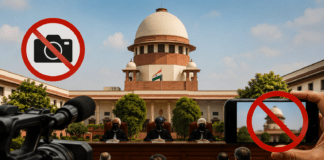

A crucial legal battle over digital privacy and data governance is unfolding in India, as the Supreme Court of India closely examines the controversial 2021 privacy policy of WhatsApp.
At the heart of the case are fundamental questions about user consent, data sharing practices, and the growing influence of big tech companies like Meta in India’s digital ecosystem.
Supreme Court’s Strong Observations
During recent hearings, the Supreme Court made it clear that it would not allow tech giants to undermine citizens’ constitutional rights. The Bench warned that companies cannot “play with” the right to privacy or dilute protections guaranteed under the Constitution.
The case revolves around WhatsApp’s January 2021 policy update, which required users to accept expanded data-sharing terms with Meta companies to continue using the platform. This “take it or leave it” approach drew widespread criticism for limiting user choice.
Supreme Court Pulls Up NCERT Over Vague Affidavit on Class 8 Textbook Rewrite
WhatsApp’s Assurance to the Court
In response to the court’s concerns, WhatsApp informed the Bench that it would comply with directives by March 16, allowing Indian users more control over how their data is shared.
According to an affidavit, users will now be able to continue using WhatsApp even if they opt out of sharing their data with Meta for advertising purposes. This marks a significant shift from the earlier stance, which effectively made data sharing mandatory for continued access.
Regulatory and Consumer Concerns
The Competition Commission of India (CCI) had earlier flagged the policy, stating that it left users with “no real choice,” raising concerns about abuse of market dominance.
Given that WhatsApp remains India’s most widely used messaging platform, the implications of the case extend far beyond a single app. It touches on how dominant digital platforms operate and the level of control users truly have over their personal data.
Difference from the 2016 Policy
A major point of contention is the shift from WhatsApp’s 2016 policy, which allowed users to opt out of sharing their data with Meta for advertising purposes.
The 2021 update removed this flexibility, prompting backlash from users who felt compelled to accept terms they were uncomfortable with in order to continue using the service.
Why This Case Matters
This ongoing legal battle could become a landmark moment in shaping India’s digital privacy framework. The Supreme Court’s scrutiny signals a push toward stronger safeguards, transparency, and accountability for tech companies operating in the country.
The outcome may influence future regulations governing data protection, competition, and consumer rights in India’s rapidly expanding digital economy.