
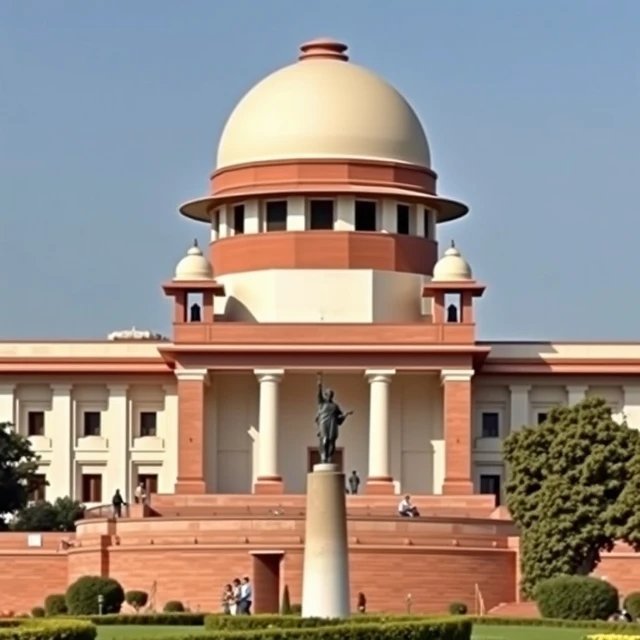
The Supreme Court of India on Thursday delivered sharp observations on what it termed the growing “freebie culture” among political parties, warning that indiscriminate distribution of benefits could hamper long-term economic development and strain state finances.
A Bench led by Chief Justice Surya Kant, along with Justices Joymalya Bagchi and Vipul M Pancholi, was hearing a plea involving the Tamil Nadu government-led power utility. The matter arose after the Tamil Nadu Power Distribution Corporation Ltd proposed providing free electricity without drawing distinctions based on consumers’ financial capacity.
“Economic Development Will Be Hampered”
During the hearing, the Court expressed concern that several states—many already running revenue deficits—continue to announce broad-based subsidy schemes without adequate fiscal planning.
The Bench observed that a substantial portion of state revenue is being spent on salaries and welfare handouts, leaving limited room for capital expenditure and developmental projects. It questioned whether nearly a quarter of annual revenue could be better channelled toward infrastructure, employment generation, and long-term economic growth.
CJI Surya Kant remarked that while welfare measures for economically weaker sections are part of the state’s constitutional responsibilities, indiscriminate distribution without assessing affordability raises serious policy concerns. The Court cautioned that such “largesse distribution” could adversely affect national economic development.
Not a State-Specific Issue
Justice Joymalya Bagchi clarified that the Court’s concern was not directed at any single state or political formation. Rather, it was addressing a broader national trend where competitive populism has increasingly shaped fiscal priorities.
The Bench suggested that if states intend to provide assistance—such as unemployment support or electricity subsidies—they should present structured budgetary proposals with clear financial justifications. Planned expenditure, the Court noted, must be backed by transparent allocations and sustainable revenue models.
Welfare vs. Appeasement
The Court drew a distinction between targeted welfare and blanket subsidies. It acknowledged that supporting citizens who genuinely cannot afford essential services like electricity is both legitimate and necessary. However, extending such benefits to all sections of society, irrespective of economic status, may blur the line between social welfare and appeasement.
“What kind of culture are we developing?” the Bench orally observed, questioning whether uniform free distribution without income-based differentiation aligns with principles of fiscal prudence and equitable governance.
A Call for Policy Reassessment
The observations signal a renewed judicial push for accountability in public finance. While the Court stopped short of issuing binding directions on policy, it indicated that it may be time for governments to revisit subsidy frameworks and balance electoral promises with economic sustainability.
As debates around welfare schemes and fiscal discipline intensify across India, the Supreme Court’s remarks are likely to fuel a broader conversation on the future of state spending, development priorities, and responsible governance.