
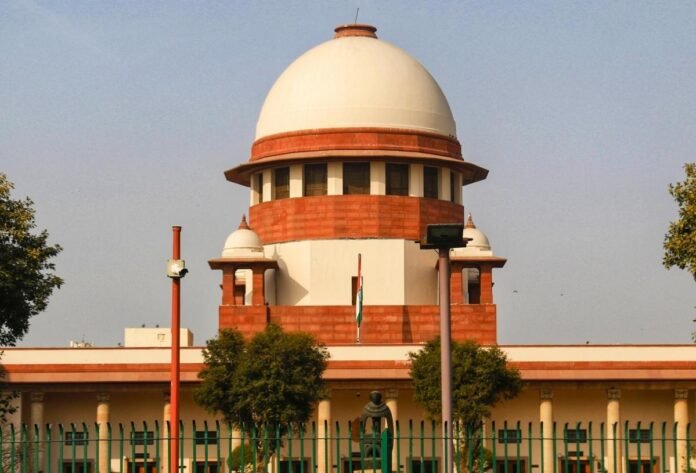
Supreme Court urges High Courts to upload full judgments promptly, warning against delays after pronouncing operative parts.
Supreme Court Sets Clear Timeline Expectations for High Courts
The Supreme Court of India has issued a strong reminder to all High Courts across the country, emphasizing that reasoned judgments must be uploaded without undue delay once the operative part is pronounced.
This direction comes amidst growing concerns over instances where parties are left waiting for the full reasoning behind verdicts — a delay that not only causes uncertainty but also undermines access to justice.
In a recent observation, the apex court stated:
“We hope that we may not have to come across any matter wherein there is a delay at the end of the High Court in uploading the reasoned order more particularly after the operative part of the judgment is pronounced.”
Judgment Must Follow Within Three Months of Reservation
Reiterating judicial efficiency norms, the Supreme Court underscored that judgments should ideally be delivered within three months from the date a matter is reserved. This timeline aligns with previous rulings and standard judicial practice, but the Court’s reminder suggests uneven implementation across different High Courts.
Legal experts have welcomed the move, stating it promotes transparency and ensures that litigants, advocates, and lower courts are not left in a legal vacuum after hearing the outcome without the rationale.
Background: Why This Matters
High Courts often pronounce the operative part of a judgment — the decision or outcome — before uploading the detailed reasoning. However, delays in releasing the full judgment can:
- Impede appeals or reviews
- Disrupt ongoing litigation involving similar issues
- Erode trust in the judicial process
These challenges were highlighted in previous Supreme Court pronouncements, such as in Anil Rai v. State of Bihar (2001), where delays in delivery were heavily criticized.
What Comes Next?
While the Supreme Court’s recent remarks stop short of issuing strict penalties or time-bound mandates, it does signal a closer scrutiny of delays in judicial reasoning and its impact on procedural fairness.
As the judiciary pushes for greater digitization and accountability, timely uploading of judgments may soon be more than just a best practice — it could become a formal requirement.
Internal References:
You can explore related legal and judicial stories on
The Legal Observer News,
National Legal News, and
Most Popular Stories.
External Link:
Watch legal discussions on this topic on The Legal Observer YouTube Channel.