
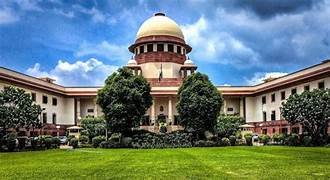
In October 2023, the Supreme Court of India delivered a unanimous verdict refusing to legally recognize same-sex marriages, ruling that there is no fundamental right to marry under the Constitution.
The five-judge bench, led by Chief Justice D.Y. Chandrachud, held that amending the Special Marriage Act of 1954 to include same-sex couples falls under Parliament’s domain, not judicial authority. While the court affirmed that queer couples can cohabit without discrimination and urged the government to form a committee for their welfare, it rejected civil unions (by a 3:2 majority) and adoption rights for same-sex partners.
*Arugments in Favour of Same Sex Marriage*
Equality and Human Rights: Denying same-sex couples the right to marry creates second-class status, violating fundamental rights under international human rights conventions.
The UDHR upholds the right to marry as a fundamental human right, emphasizing equality and dignity. In India, activists argue that this aligns with Article 21 (Right to Life) of the Constitution.
Cohabitation as a Fundamental Right: The SC in judgments such as Lata Singh v. State of UP, 2006 and Shakti Vahini v. Union of India, 2018 has affirmed cohabitation as a fundamental right under Article 21, obligating the government to legally recognize relationships between same-sex couples.
Legal and Economic Benefits: Legalizing same-sex marriage provides equal access to the legal and economic benefits associated with marriage, inheritance rights, and social security benefits.
International Principles: Same-sex marriage is legal in more than 30 countries, aligning with global human rights principles that advocate for equality and dignity for all individuals, irrespective of sexual orientation.
*Arguments Against Same-Sex Marriages* Religious and Cultural Beliefs:
Many religious and cultural groups assert that marriage
should be between a man and a woman, arguing that redefining marriage challenges their foundational values and beliefs.
Against Natural Order: Some oppose same-sex marriage on the grounds that marriage’s primary purpose is
procreation, which they believe same-sex couples cannot fulfill, thus contradicting the natural order.
Legal and Regulatory Challenges: Concerns are raised about potential legal complications, such as adjustments needed in inheritance, and property laws which could involve complex legal changes.
Adoption Issues: When same-sex couples choose to adopt children, they may face societal stigma, discrimination, and adverse effects on the child’s
emotional and psychological health, particularly in Indian society.
*Rights of SAME SEX COUPLES in India*
Same-sex couples in India lack legal recognition for marriage or civil unions, following the Supreme Court’s October 2023 verdict in Supriyo v. Union of India and its dismissal of review petitions in January 2025.
*Cohabitation Rights*
Courts across states like Punjab, Haryana, Kerala, and others have ruled that same-sex live-in relationships are lawful and protected under Article 21 (right to life and
liberty), entitling couples to police protection from threats,
such as family harassment. The Supreme Court in Deepika Singh v. Central Administrative Tribunal (2022) expanded the definition of “family” to include same-sex cohabiting partners, granting them equivalent rights to
heterosexual live-in couples, like access to certain welfare benefits.
Post the 2018 Navtej Singh Johar decriminalization of homosexuality, same-sex couples enjoy anti-discrimination safeguards based on sexual orientation, full constitutional equality, and state obligations to support their relationships. They can access some private services (e.g., financial, healthcare) as live-in partners, but lack marriage-specific benefits like joint tax deductions,
spousal gratuity nomination, adoption rights, or inheritance without wills. Transgender persons in opposite-sex marriages retain rights under existing laws.
*Global Status on Recognition of Same-Sex Marriage*
As of 2024, over 30 countries worldwide including the US, Australia, Canada and France have legalized same-sex marriages.
The Netherlands was the first country in 2001 to legalise same-sex marriage by amending civil marriage law.
Taiwan was the first country in Asia to legalize same-sex marriage.
Several nations, such as Iran, Afghanistan, Saudi Arabia, and Brunei, not only prohibit same-sex marriages but also impose severe penalties, including the death penalty or
corporal punishment.