
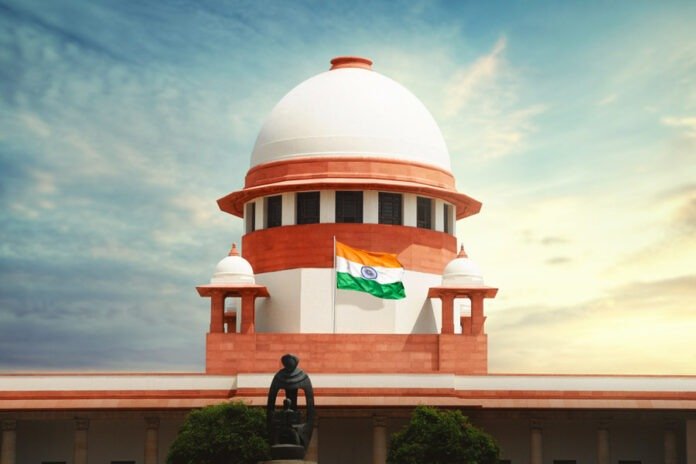
Supreme Court will pronounce its verdict tomorrow on review petitions challenging the 3-year practice rule for Civil Judge recruitment.
The Supreme Court is set to decide whether its mandatory three-year legal practice requirement for entry-level judicial service should be retained, modified or relaxed for certain categories.The Supreme Court will on Friday pronounce its judgment on a batch of review petitions challenging the mandatory three-year legal practice requirement for candidates seeking direct recruitment as Civil Judges (Junior Division). The verdict is expected to have significant implications for judicial service aspirants, particularly fresh law graduates, women candidates and persons with disabilities.
A Bench comprising Chief Justice of India Surya Kant, Justice Augustine George Masih and Justice K. Vinod Chandran had reserved its judgment on July 28 after hearing submissions from various counsel, intervenors and the amicus curiae. As per the causelist, Justice K. Vinod Chandran is scheduled to pronounce the judgment.
The review petitions seek reconsideration of the Supreme Court’s May 2025 decision restoring the requirement that candidates entering the judicial service through direct recruitment must have at least three years of legal practice. The requirement had become a major issue among law graduates aspiring to join the subordinate judiciary immediately after completing their legal education.
The controversy centres on whether practical experience at the Bar should be treated as an essential qualification before a candidate assumes judicial office or whether adequate institutional training after recruitment can sufficiently prepare newly graduated law students for judicial responsibilities.
During the hearing, counsel opposing the three-year practice rule argued that the requirement could discourage talented young graduates from choosing judicial service. Concerns were also raised about its possible disproportionate impact on women and persons with disabilities.
One of the arguments advanced before the Bench was that requiring candidates to wait three years before becoming eligible could make judicial service less attractive to young law graduates. Counsel submitted that women and persons with disabilities could face particular difficulties in meeting the requirement.
Senior Advocate Pinky Anand, while opposing the mandatory practice requirement, argued that the emphasis should instead be placed on strengthening judicial training after recruitment. She suggested a system of continuing legal education and a uniform training framework across the country, pointing out that State Judicial Academies presently follow varying models.
Senior Advocate Colin Gonsalves also argued against making three years of litigation experience a mandatory eligibility condition. According to the submissions, judicial officers could instead receive comprehensive institutional training immediately after graduating from law school. The existence of Judicial Academies in various States was cited as an avenue for providing such specialised training.
The amicus curiae, Senior Advocate Siddharth Bhatnagar, suggested a more calibrated approach. Instead of completely removing the practice requirement, he proposed possible relaxations for particular categories of candidates. These included concessions relating to qualifying marks for women and persons with disabilities. He also suggested that judicial clerkships could potentially be recognised as relevant legal experience.
The Court also heard a writ petition seeking relaxation of the three-year requirement for persons with disabilities. Some High Courts and law universities have reportedly supported greater flexibility for specially abled candidates, highlighting concerns about equal access to judicial recruitment.
Another issue raised before the Court concerned whether the legal experience of law officers working with public sector undertakings could be counted towards the required three years of practice. The question is significant because the eligibility requirement affects not only fresh graduates but also candidates who may acquire legal experience outside conventional litigation practice.
The Supreme Court’s decision will therefore determine the future contours of the three-year practice rule for entry-level judicial recruitment. Depending on the outcome, the Court may either reaffirm the existing requirement, modify its application or carve out specific relaxations for particular categories of candidates.
The verdict will be closely watched by judicial service aspirants across the country, as the eligibility requirement directly affects the timing and pathway through which law graduates can enter the subordinate judiciary.
For more updates on the Supreme Court, judicial appointments and important legal developments, readers can follow The Legal Observer and its National News section. Video updates are also available on The Legal Observer’s YouTube channel.