
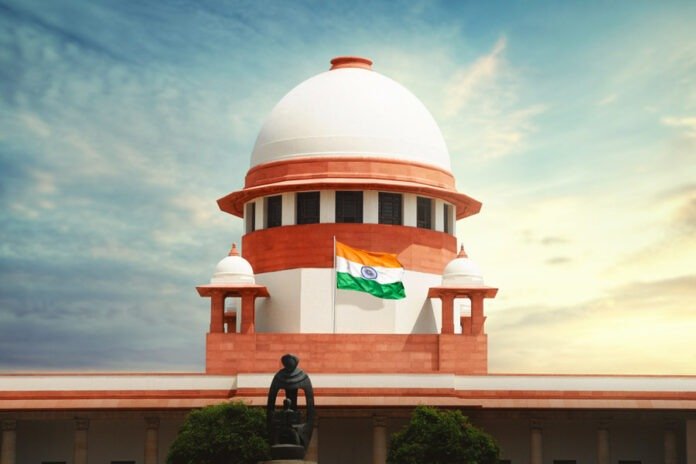
Delhi women safety: Supreme Court directs enhanced police patrolling, strict public transport driver verification and action against unauthorised liquor outlets.
Expressing concern over recent sexual offences in Delhi-NCR, the Supreme Court has directed authorities to strengthen preventive policing and ensure that existing safety measures deliver visible results on the ground.
Supreme Court Steps Up Scrutiny of Women’s Safety in Delhi-NCR
The Supreme Court of India has directed the Delhi Police, local administration and transport authorities to implement immediate preventive measures to improve women’s safety across the national capital. The directions were issued on October 5, 2026, in the suo motu proceedings concerning recent rape incidents in Delhi-NCR.
A Bench comprising Justice J.B. Pardiwala and Justice K. Vinod Chandran emphasised that public safety cannot be ensured merely through administrative orders or the existence of policing mechanisms. Authorities must demonstrate that the prescribed safeguards are operational, effective and consistently implemented.
The proceedings, titled In Re: Recent Rape Incidents in Delhi NCR, seek to address broader institutional failures in protecting women and children in public spaces. The Court’s intervention follows reports of multiple alleged sexual offences, raising concerns about the effectiveness of existing preventive measures.
Enhanced Police Patrolling Around Educational Institutions
One of the principal directions requires the Delhi Police to strengthen beat patrolling across the National Capital Territory of Delhi, particularly around schools, colleges, universities, coaching centres and other locations identified as vulnerable.
The measure aims to improve police visibility and enable timely intervention in areas where women and children may face heightened risks. The Court stressed that safety arrangements must operate effectively during different hours, including late evenings and early mornings.
The authorities are expected to implement vulnerability mapping and use the identified risk areas to guide deployment. The emphasis is on preventive policing rather than responding only after a criminal offence has occurred.
The Court has also examined the functioning of existing anti-eve-teasing units known as Shishtachar Squads. It has sought information about their actual operations, the reports submitted by the police and the follow-up action taken on complaints and identified risks.
Strict Verification of Cab and Bus Drivers
The Supreme Court has directed strict verification of drivers and assistants working in public transport vehicles. The requirement extends to government-operated buses, private buses, taxis, cabs and auto-rickshaws, including vehicles associated with app-based aggregators such as Ola, Uber and Rapido.
Only duly registered and verified persons are to be permitted to operate these vehicles. The Court has further directed that the names and photographs of verified drivers and assistants must be displayed prominently so that passengers can identify the authorised personnel.
The directions place responsibility on the concerned transport authorities to ensure compliance. Transparent identification can help passengers recognise unauthorised individuals and report discrepancies before they develop into more serious safety concerns.
The Court has also sought information regarding emergency SOS mechanisms, including the authorities responsible for responding to alerts, the prescribed response timelines and the arrangements for monitoring compliance.
These measures underline the importance of accountability throughout the public transport system, particularly for women travelling alone or during late hours.
Action Against Unauthorised Liquor Outlets
The Court has also directed authorities to identify and take lawful action against unauthorised liquor shops and establishments operating without the requisite permissions.
Particular attention has been drawn to eateries and other establishments where liquor is supplied illegally. Beat officers have been directed to remain vigilant, report violations to their superiors and address situations involving loitering or crowding around liquor outlets that may lead to harassment or obstruct pedestrians.
The authorities have also been directed to identify vehicles, including trucks and heavy vehicles, that are unlawfully parked in locations where they obstruct visibility or create blind spots. Appropriate steps must be taken to remove such obstructions.
These directions seek to address environmental and administrative factors that can compromise safety in public spaces.
Authorities Must Demonstrate Actual Compliance
A central concern underlying the proceedings is the gap between formal safety protocols and their implementation. The Court has examined existing police standing orders and circulars, indicating that the challenge is not necessarily the absence of rules but whether those rules produce meaningful results.
The Bench has required senior officials to submit compliance information through affidavits, placing responsibility on the administration to account for the implementation of the directions.
The broader proceedings also examine police staffing, the protection and confidentiality of complainants, safeguards against intimidation and the functioning of specialised courts dealing with sexual offences.
The Supreme Court’s intervention reinforces the constitutional importance of protecting life, dignity and personal liberty under Article 21. Ensuring women’s safety requires coordinated action by police, transport authorities and local administrators, supported by effective monitoring and accountability.
For more updates on judicial developments and women’s rights, readers can visit The Legal Observer’s national news section and explore its legal news coverage.
The Court’s directions make clear that preventive measures must extend beyond official assurances. Their effectiveness will ultimately depend on sustained implementation, prompt responses to complaints and accountability for failures. Further updates on legal proceedings and court developments are available through The Legal Observer’s YouTube channel.