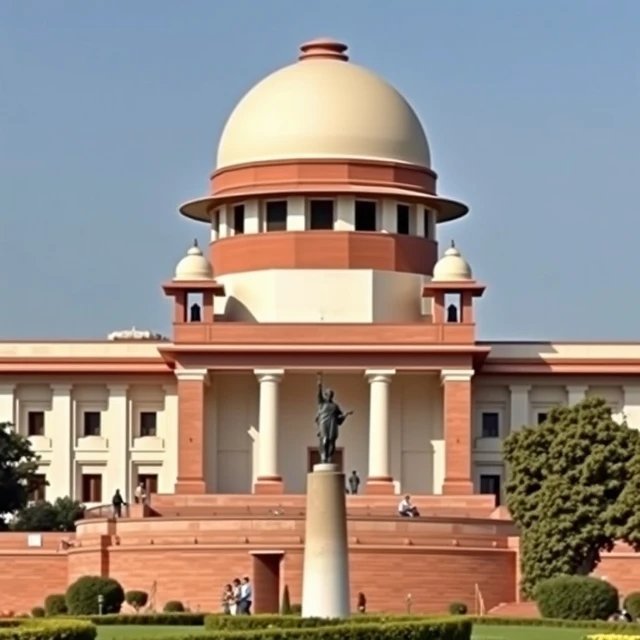
Supreme Court pending cases and High Court backlog remain a major concern. The Law Minister says over 10,000 apex court cases and 80,000 High Court cases have remained pending for decades.
India’s judicial backlog continues to pose a serious challenge, with thousands of cases remaining unresolved for decades despite significant government spending on judicial infrastructure and reforms.
The growing number of pending cases in the Supreme Court and High Courts has once again come under the spotlight after the Union Law Minister highlighted the scale of judicial delays in Parliament. According to the Minister, more than 10,000 cases have remained pending in the Supreme Court for over 10 years, while over 80,000 cases in various High Courts have been awaiting disposal for more than 30 years.
The figures have intensified the debate over judicial efficiency and the need for structural reforms in India’s justice delivery system. Delays in deciding cases not only affect litigants but also have a broader impact on public confidence in the legal system and access to timely justice.
The Law Minister informed Parliament that the Central Government has spent more than ₹9,800 crore since 2011 on strengthening judicial infrastructure across the country. The expenditure has been made under various schemes aimed at improving court facilities, increasing digitalisation, and supporting the functioning of subordinate courts.
Despite these investments, the backlog of cases has continued to grow. The Minister stated that while the Government has consistently extended financial and administrative support, the actual disposal of cases lies within the domain of the judiciary. He indicated that the responsibility for reducing judicial pendency primarily rests with the courts, as the executive cannot interfere with judicial functioning.
The issue of case pendency has remained one of the biggest challenges facing the Indian judicial system. Experts have often attributed delays to multiple factors, including a shortage of judges, increasing litigation, procedural complexities, frequent adjournments, and inadequate court infrastructure in several states.
The Supreme Court and High Courts have, over the years, introduced several measures to improve efficiency. These include virtual hearings, digitisation of court records, e-filing of cases, and case management initiatives. While these reforms have improved access to justice in many respects, they have not been sufficient to significantly reduce the mounting backlog.
Legal experts have repeatedly stressed that filling judicial vacancies remains one of the most effective ways to address pendency. According to official data released periodically, vacancies in the higher judiciary continue to affect the pace of case disposal. Timely appointments, better infrastructure, and modern case management systems are widely regarded as essential to improving judicial efficiency.
The issue also raises concerns for citizens seeking speedy justice. Prolonged litigation often increases legal costs, delays dispute resolution, and affects businesses, investors, and individuals alike. The constitutional promise of timely justice becomes increasingly difficult to achieve when cases remain pending for decades.
The Centre and the judiciary have consistently maintained that judicial reforms require cooperation between both institutions. While the Government provides financial assistance and infrastructure, judicial administration, listing of matters, and disposal of cases remain under the control of the courts. Observers believe that coordinated efforts, technological innovation, and continued institutional reforms will be necessary to tackle the longstanding backlog.
The latest figures once again underline the urgent need for sustained measures to improve the efficiency of India’s justice delivery system. As the debate over judicial reforms continues, reducing pendency is expected to remain one of the key priorities for policymakers, the judiciary, and legal stakeholders.
For more updates on important legal developments, readers can explore The Legal Observer, follow the latest reports in the News and National sections, and read expert analysis in the Insight section. Video explainers on significant legal issues are also available on the publication’s official YouTube channel.
This report is based on the statement made by the Union Law Minister regarding judicial pendency. Any further official clarification or updated judicial data will be reflected as it becomes available